Updated 2026-09-09 · 4 min read
Liquid-ready servers: what to check before you buy
Key takeaways
"Liquid-ready" (DLC-ready) servers ship with factory cold plates and quick disconnects — every major OEM (Supermicro, Dell, Lenovo, Gigabyte and others) now sells them across GPU lines. Compatibility comes down to five things: which components have cold plates, the coupling standard (OCP UQD family), the coolant temperature class (ASHRAE W-class) the server accepts, required flow and pressure, and the physical manifold interface. Insisting on OCP-standard interfaces is what keeps you vendor-independent: an open cabinet accepts any compliant server, so future refreshes don't strand your cooling infrastructure.
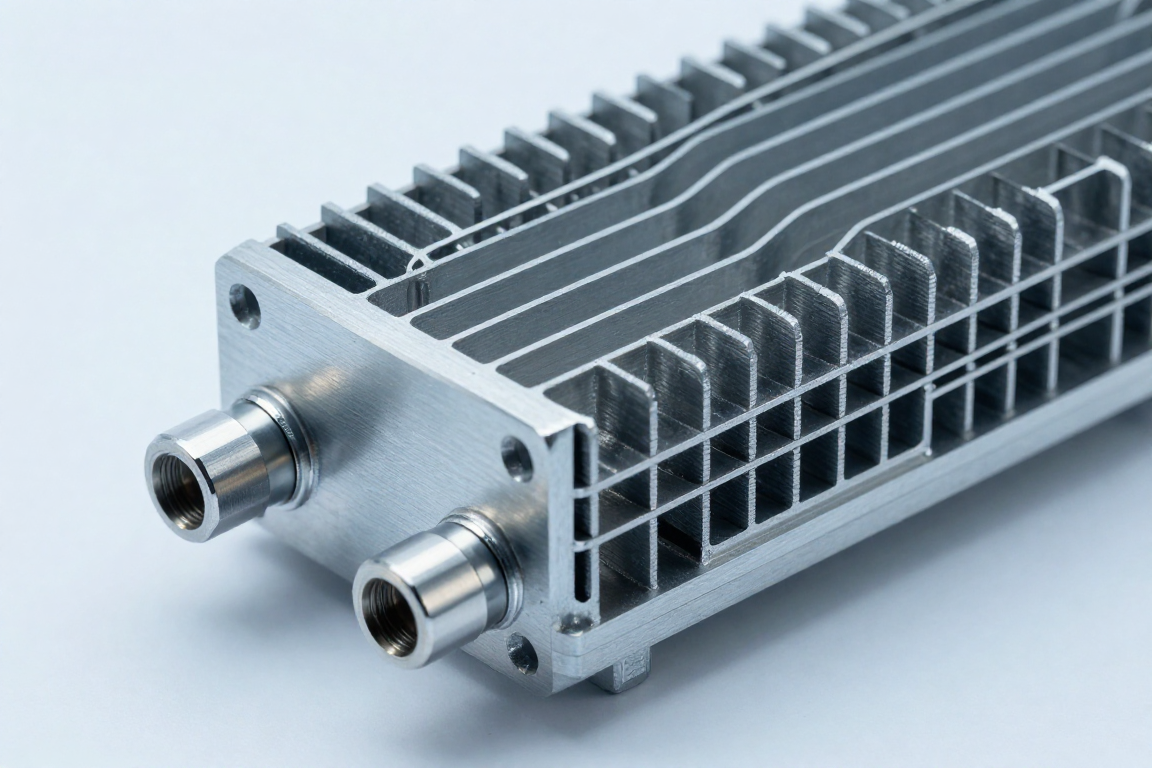
The five checks
| Check | What to ask for |
|---|---|
| 1. Cold plate coverage | CPU + GPU plates standard; VRM plates optional. Coverage defines how much heat leaves through liquid vs air |
| 2. Coupling standard | OCP UQD family and size — this determines what it physically plugs into |
| 3. W-class | ASHRAE coolant class the server tolerates (W32+ is efficient; W17 means it demands cold water) |
| 4. Flow & pressure | Required L/min at a stated pressure drop — your CDU/manifold must deliver it per server, summed across the rack |
| 5. Serviceability | Tube lengths and dripless disconnects that let the server slide out without draining the rack |
Why open interfaces matter more than the server brand
Some rack products bind you to one vendor's nodes; some require custom cold-plate adaptation per model. Both turn your cooling investment into a lock-in device. The open pattern — OCP-compliant manifold, standard UQD couplings, published flow/temperature specs — lets you mix generations and brands inside one cabinet and replace servers on their own lifecycle. When a cooling vendor can't name their coupling standard, treat it as a lock-in signal.
Frequently asked questions
What is a liquid-ready server?
A server factory-fitted for direct liquid cooling: cold plates on the CPU/GPU, internal coolant tubing, and dripless quick-disconnect ports instead of (or alongside) air heatsinks. All major OEMs — Supermicro, Dell, Lenovo, Gigabyte and others — offer DLC-ready configurations across their GPU server lines.
Can I mix server brands in one liquid cooling rack?
Yes, if everything speaks the same interfaces: OCP-family UQD couplings, a compatible coolant temperature class, and flow/pressure requirements that the rack’s CDU and manifold can satisfy per server. This is the practical benefit of insisting on open standards rather than proprietary rack-node bindings.
What is the ASHRAE W-class on a server spec sheet?
It is the coolant supply temperature the server is certified to accept — W17 through W45, number in °C. A W32 or W40 server runs on warm water, enabling efficient or chiller-less facility cooling; a W17-only server forces cold water and higher energy use. Match server class and CDU design or you will pay for it in efficiency.